IWhat sticks
How people actually learn
The real theory of how people learn: memory, feedback, why learning styles are a myth. AI then accelerates every rep. The method travels; the prompts don't.
Inaugural cohort · February 14–20, 2027 · San Diego · Invitation-only
You spend a week in residence, learning a field you've never worked in — one next door to yours, or a world away — with AI as your accelerator. By Friday, you stand behind what you built and teach it to the room for five minutes. That's the most direct way to de-risk your career.
One email when applications open. No spam.
Why this, why now
The decade you spent becoming good at something is now a prompt away for anyone with a chat window. You watch a model draft what used to take you a week, and you wonder what you're still for.
The fear is that your edge suddenly looks optional, and your job description could change faster than you can retrain. Most people feel that and either ignore it or doomscroll.
White-collar work is getting sorted into two curves. One belongs to the people getting on the AI curve, compounding small wins month after month. The other belongs to everyone watching from the window, waiting to see how it shakes out. Five or ten years out, those two groups land in very different places.
Getting on the curve is how you de-risk your career, and it's trainable. You practice in one week with coaches to guide you, walking into a field you don't know and making it yours. The ability you build is the asset, and it stays yours no matter what the models do next.
Who this week is for
You're at least a few years into your craft, and often a couple of decades: a scientist, an engineer, a financier, a marketer, a lawyer, an educator. You can feel AI changing the ground under the field you've mastered. This week is your chance to be a beginner again, in a field you've never worked in, where your seniority doesn't follow you.
You choose the field, you set the questions, and you work hard on purpose. The people who love the sound of that are exactly who we look for.
Your new field is yours to choose, with one rule: it can't be your day job under a new name. Both directions past that rule are good ones. A field next door to your world but outside your daily work: a marketing executive takes on behavioral science, a quant takes on epidemiology, an operations manager takes on the math of scheduling. A field a world away: a surgeon takes on game theory, a physicist takes on historiography. You'll pick it when you apply and arrive with it already in hand. Pull it off once, next door or a world away, and you can learn anything.
If you're reading this early in your career, before a week like this fits the budget, the retreat is a working professional's room for now. We're seeding a community of learners around it, and the waitlist is your earlier way in.
All week you'll be reading, thinking, writing, and arguing your way through the new field. That's how knowledge fields are learned, and it's where AI accelerates the loop, pressing on what you actually understand.
We cap the week at twenty participants and curate the room for a diversity of knowledge fields. You spend the week alongside people making the same kind of jump, and you leave with peers who understand the climb, a network of friends you can call on for the future.
What you leave with
Five days on how people learn, then AI accelerates it. Two coaches in the room, and up to twenty peers spanning many different fields.
IWhat sticks
The real theory of how people learn: memory, feedback, why learning styles are a myth. AI then accelerates every rep. The method travels; the prompts don't.
IIWhat you can show
A journal club, a written explainer, a small model or analysis, a teaching deck. You pick the form; we push on whether it proves you learned.
IIIWhat you can't fake
Day 5: you teach your new domain to the room and show your artifact as evidence. If they understand, you own it. Where you can't, that's your honest gap.
Where this goes
The February retreat is the inaugural one, and this is the plan for what comes after.
February 14–20, 2027, twenty people in residence. One week with coaches to guide you as you take on a field you've never worked in and make it yours.
Everyone this work touches, waitlist through alumni, seeds a standing community of learners. We think agents can do the looking-after: introductions across fields, learning sprints, the upkeep that usually burns out volunteer organizers. That part is still taking shape.
The plan is to run this annually. People who come this year come back with a new field to take on, and they pull the next cohort in with them. It all adds up to what we're about, which is pounding away at the problem of learning in an age of AI.
The week, day by day
You arrive Sunday afternoon to settle in. We take over one Airbnb house for the week, and the program runs Monday 9 am through Friday early afternoon; checkout is Saturday.
Why learning — not any body of knowledge — is the career skill that survives AI. Then your first, deliberately unstructured attempt at the new domain, with AI as your accelerator.
The question ladder: an AI plays beginner in your own field, then accelerates your climb of the new one, rung by rung. Afternoon: AI proposes analogies, and you hunt for where they break.
Two recall tests with no AI in the room: write one idea deep, then teach it to a partner. Then you commit to your artifact, the thing you'll defend Thursday and present Friday, and start it with AI woven in.
Heads-down work on your artifact, AI throughout, with a 1:1 defense of your work against one of us. The evening is the celebration dinner.
Five minutes at the front: teach the room your new domain, artifact as proof. Then a closing debrief, and the method goes home with you.
Each day ends with a short reflection, written by hand, no AI — Thursday night belongs to the celebration dinner. Writing it yourself is the one thing the model can't do for you: noticing your own thinking, and asking the question that turns exposure into ownership.
Your coaches
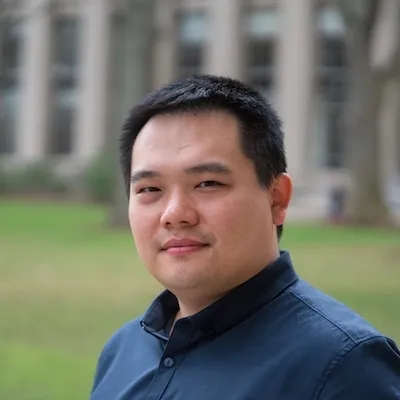
Senior Principal Data Scientist, Moderna
Eric started wet lab in biochemistry and microbiology, then jumped into computation and kept going: Bayesian stats, graph theory, deep learning, diffusion models. Each jump was its own foreign field. He's spent the last two years running this loop inside drug discovery at Moderna, where the work now moves two to three times the load and reaches a first prototype roughly ten times faster. These days he's running the same loop on quantum computing, in public. He's building the retreat to hand that curve to professionals in every field.
Read Eric's learning journey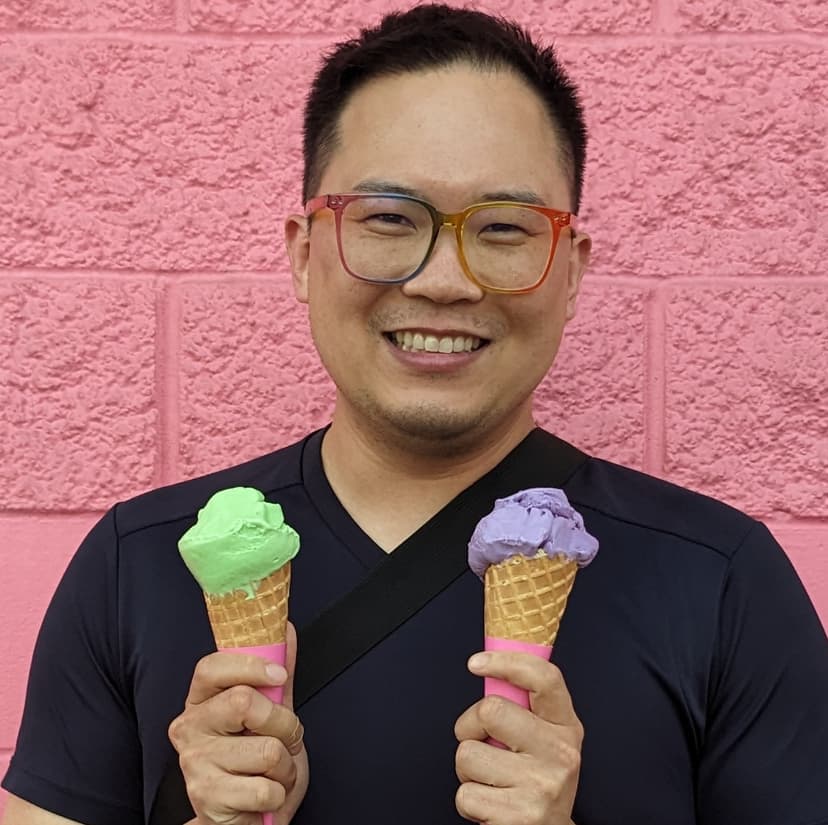
Data Science Lecturer, University of British Columbia
Daniel studies how people actually learn to work with data. He teaches data science at the University of British Columbia, authored the book Pandas for Everyone, and has been a longtime Carpentries instructor since 2014. He brings practical pedagogy experience to the table.
The details
In person, San Diego, February 14–20, 2027. Lodging and meals are included; travel to and from the venue is your own.
Applications open to the waitlist first · February 14–20, 2027
Request an invitation
Applications open to the waitlist first. One email when they open, one reminder before they close.
Already on the waitlist? Sign in
When applications open, we'll invite you to a short interview. That's how we curate the room. And the waitlist itself is where the community of learners starts.